
Age helps a tutor plan attention and communication, but it does not establish reading level. A child who knows a few surahs from memory may still need support recognizing joined Arabic letters. Another child of the same age may be ready for unfamiliar Mushaf reading.
| Part | Sample time | Purpose |
|---|---|---|
| Settle and review | 3 minutes | Listen to the previous task and choose one correction. |
| Model one new skill | 4 minutes | Demonstrate a manageable letter, mark or reading pattern. |
| Take short reading turns | 9 minutes | Let the child read, receive correction and try again. |
| Finish with a practice target | 4 minutes | Explain the assigned task to the child and parent. |
This is a sample structure for a 20-minute session, not a fixed timetable for every lesson. Published plans include different session lengths.
Progress parents can actually discuss
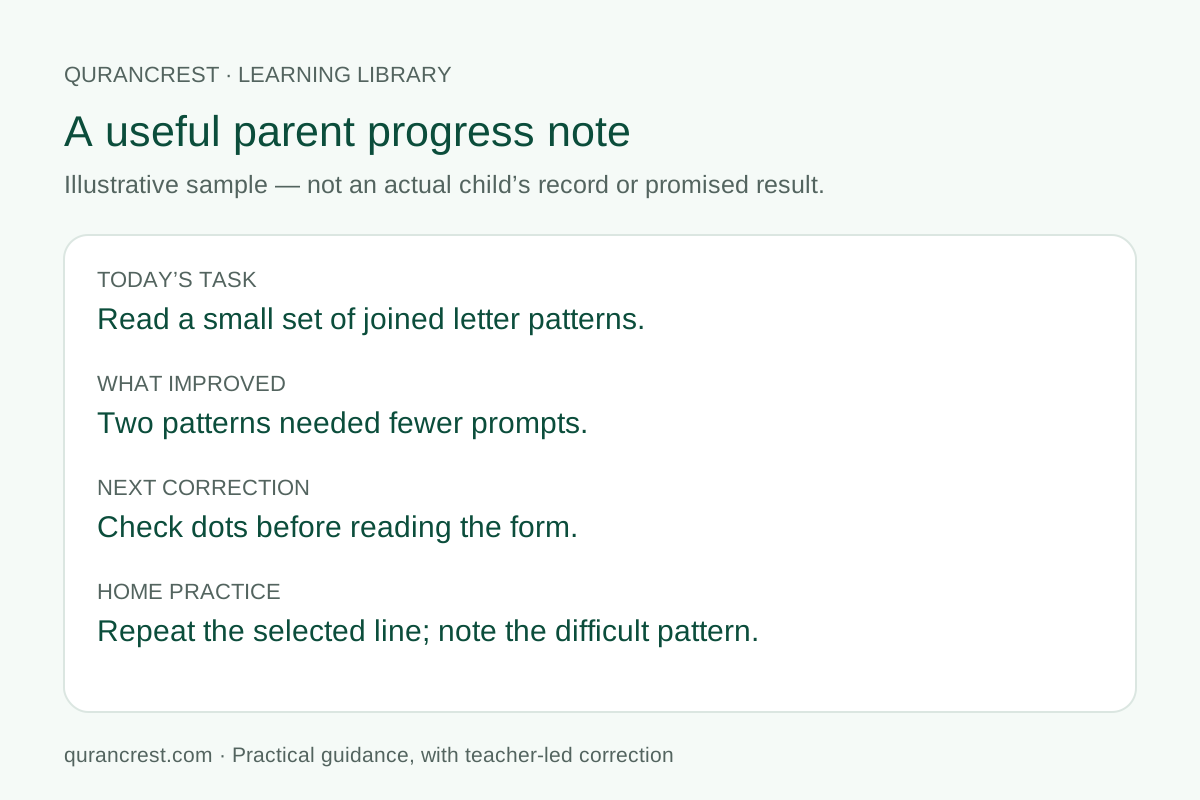
Ask for a specific skill rather than only the number of pages completed. Can the child recognize a letter in a different position? Read the assigned line without being led word by word? Notice the correction made last time? These observations help decide whether to continue, reduce the task or review a foundation.
If concentration drops
Tell the tutor what happened before and during the lesson: tiredness after school, a noisy room, a difficult task or trouble hearing. A smaller practice target, a different window or more short turns may help. A single difficult day does not prove that the child cannot learn.
Parent preparation
- Test the device and audio before the lesson.
- Keep the requested book open and the class in an observable space.
- Let the child answer before supplying the answer yourself.
- Confirm how progress updates and timetable changes will be communicated.